


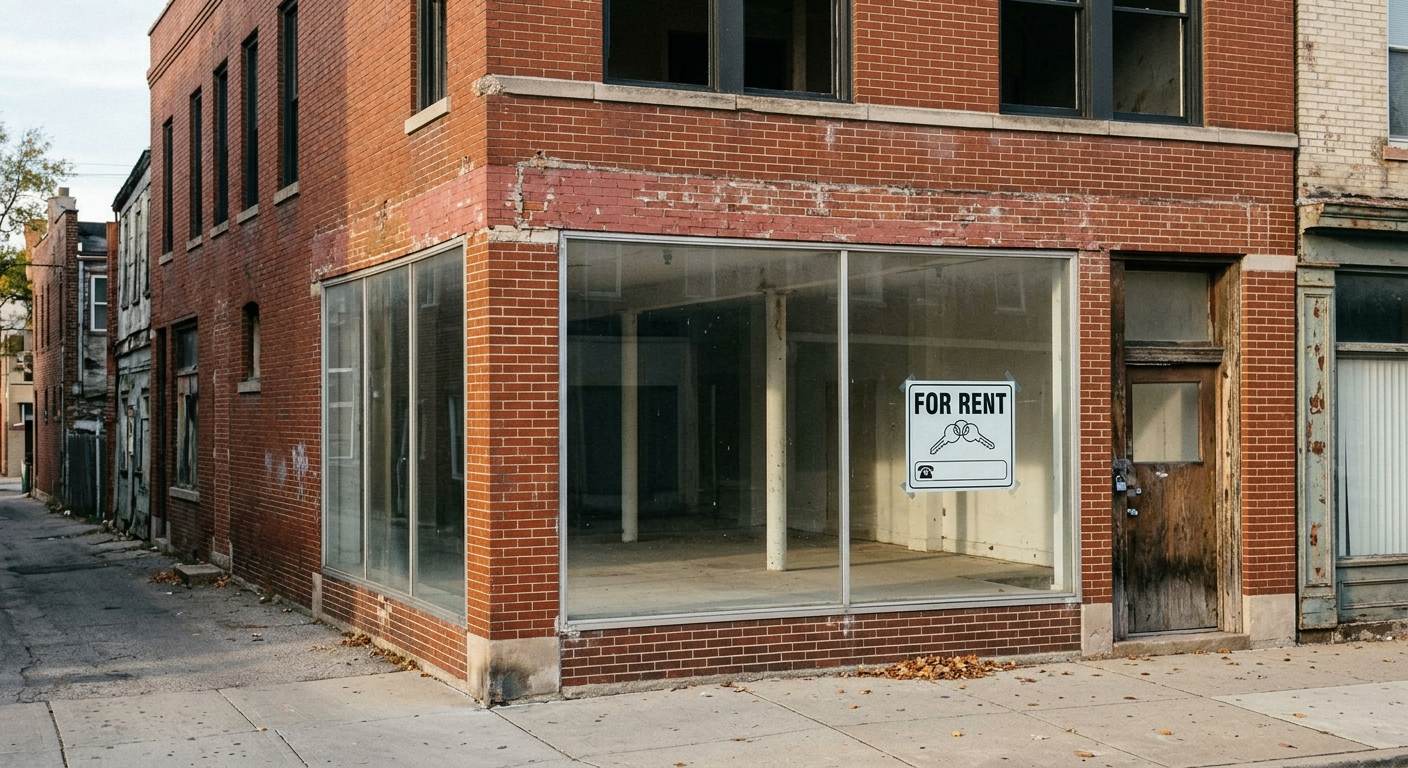
Why Commercial Property Owners Prefer Vacancy Over Cutting Rent: The Valuation Logic Explained
If you’ve ever driven past a shopfront that’s sat empty for months, or noticed a “For Lease” sign that never seems to come down, you’ve probably wondered why the owner doesn’t just drop the rent and get someone in. It seems obvious — some income beats no income, surely?
For residential landlords, that logic usually holds. But commercial property owners often behave very differently, and once you understand the different types of commercial real estate, the empty shopfront starts to make a lot more sense.
This isn’t about stubbornness or bad management. It’s about protecting an asset’s value on paper, its bankability, and its future sale price — sometimes at the direct cost of short-term rental income. In this article, we’ll walk through why that trade-off happens, how it plays out across office towers, retail strips and industrial sheds around Australia, and what it means if you’re a tenant, owner, buyer or lender trying to make sense of a vacant commercial property.
Understanding How Commercial Property Valuation Actually Works
Residential valuers mostly look at comparable sales — what similar houses down the street recently sold for. Commercial property valuation works differently. Most commercial assets — offices, retail premises, industrial warehouses — are valued using recognised commercial property valuation approaches and methods such as capitalisation analysis and discounted cash flow, depending on the property and valuation purpose.
In simple terms, the capitalisation approach works like this:
Property Value = Net Annual Rent ÷ Capitalisation Rate
The capitalisation rate is a percentage that reflects the return an investor would expect for the risk of that asset — think of it as similar to a yield. A well-located Sydney CBD office might trade on a tighter (lower) cap rate than a secondary industrial shed in a regional centre, because it’s viewed as lower risk.
The important part for this discussion: rent is the input that drives the whole equation. If the annual rent a property earns goes up, the valuation goes up (assuming the cap rate stays the same). If the rent drops, the valuation drops too — often by a much bigger dollar figure than the rent reduction itself, because that lower rent gets multiplied out over the “life” of the asset via the cap rate.
This is the mechanical reason a seemingly small rent cut can do outsized damage to a property’s valuation — and it’s the starting point for understanding why owners resist it so strongly.
A Simple Example
Say a landlord owns a small commercial building leased at $100,000 net rent per year, and the market is valuing similar buildings on a 7% capitalisation rate.
- Value = $100,000 ÷ 0.07 = approximately $1,430,000
Now imagine the landlord drops the rent to $85,000 to keep a struggling tenant, or to fill a vacancy quickly.
- Value = $85,000 ÷ 0.07 = approximately $1,210,000
A $15,000 annual rent reduction — around 15% — has wiped roughly $220,000 off the property’s value on paper. That’s the leverage effect of capitalisation, and it’s why a rent cut can feel far more painful to an owner than the raw dollar figure suggests.
Why a Temporary Vacancy Can Be “Cheaper” Than a Permanent Rent Cut
This is the crux of the whole issue. A vacancy is, by its nature, temporary — it’s a gap in income while the owner looks for the right tenant. A rent reduction, on the other hand, tends to set a new benchmark that’s very hard to walk back from. Here’s why owners treat these two outcomes so differently.
1. Valuations Are Based on Current, Committed Rent
When a valuer assesses a commercial property, they generally look at the rent that’s actually contracted under the current lease (or leases), not what the space could earn if fully let. A vacant unit doesn’t automatically drag down the valuation of the rest of the building the same way a permanently discounted lease does, because:
- A vacancy can be explained as short-term and can be backed by a “market rent” assumption from comparable evidence.
- A signed lease at a reduced rent becomes hard evidence of what the space is actually worth — and that evidence doesn’t go away when the tenant eventually leaves.
2. Lease Terms Set a Benchmark for Every Future Negotiation
Commercial rents typically move through fixed annual increases (a set percentage, or increases tied to CPI — the Consumer Price Index) or market reviews at set points in the lease. Whatever rent is agreed today becomes the base that future increases are calculated from.
If a landlord accepts a heavily discounted rent just to fill a space, every future rent review, and often the next tenant’s opening rent, gets anchored to that lower figure. A short vacancy, by contrast, doesn’t create a paper trail that future valuers and tenants can point to.
3. “Face Rent” vs “Effective Rent” — and Why It Matters for Value
This is one of the more misunderstood concepts in commercial leasing, and it’s a big part of why owners go to such lengths to avoid a straight rent cut.
- Face rent is the headline rent written on the lease document — the number everyone sees.
- Effective rent is what the landlord actually receives once you account for incentives such as rent-free periods, fit-out contributions, or rent abatements.
Rather than cutting the face rent, many Australian commercial landlords will instead offer incentives — for example, three months rent-free on a five-year lease, or a cash contribution toward the tenant’s fit-out. Keeping the face rent high on paper helps preserve the building’s perceived worth, which matters most if the owner is planning to sell.
Why does this distinction matter so much? Because a lease with a high face rent and a generous incentive can, in some cases, still support a higher valuation than a lease with a straightforwardly lower rent — even though the tenant’s actual out-of-pocket cost may end up similar either way. Valuers capitalise the effective rent, not the face figure, and a generous incentive can be the deciding factor between a valuation that stacks up for a purchase and one that doesn’t.
It’s worth noting that experienced valuers aren’t easily fooled by this. Most will look through to the effective rent and adjust the capitalisation rate accordingly to reflect the added risk that a heavily incentivised lease represents. But the strategy still matters because it preserves optionality, and because not every valuer, lender or buyer digs into the detail with the same rigour.
Why This Behaviour Shows Up in Certain Property Types More Than Others
This pattern isn’t universal — it tends to be most pronounced in certain segments of the commercial market.
Office Towers and Larger Commercial Buildings
Large, professionally managed office assets — particularly those owned by REITs (Real Estate Investment Trusts), super funds or institutional investors — are extremely sensitive to valuation because:
- Valuations directly affect the reported value of the fund or trust to its investors.
- Lower valuations can trigger loan covenant issues if the property is used as loan security.
- Fund managers are often remunerated partly on the performance of the portfolio’s book value.
For these owners, protecting the headline valuation across an entire portfolio can matter more than the cash flow from one or two vacant floors.
Retail Strips and Shopping Centres
Retail landlords face similar pressure but with an added twist: existing retail tenants often have rent review clauses tied to turnover or comparable market rent. A publicly known rent cut to attract a new tenant can trigger other tenants (or their lawyers) to request the same treatment, creating a domino effect across the whole centre.
Industrial and Warehouse Property
Industrial owners have generally had more room to move in recent years given strong demand for warehouse and logistics space in most Australian capital cities, so aggressive vacancy-over-discount strategies show up less often here — but the same underlying logic still applies whenever the market softens.
The Risks and Trade-Offs Owners Are Weighing
None of this means holding out for a higher rent is always the right call — it’s a genuine trade-off, and it doesn’t always pay off.
- Holding costs add up. Council rates, land tax, insurance, security, and often ongoing outgoings continue whether or not the property is tenanted.
- A long vacancy can itself become evidence. If a valuer sees a property has sat empty for an extended period, that can be treated as a market signal in its own right, sometimes pushing the cap rate out (which lowers value) regardless of what rent is eventually achieved.
- Land tax and vacancy considerations vary by state. In Victoria, for example, there is a vacant residential land tax regime, and commercial owners should always check current state-based land tax rules with their accountant, as these differ between New South Wales, Victoria, Queensland and other states and territories, and rules do change.
- Depreciation and building condition don’t pause. An empty commercial building can deteriorate faster without a tenant actively using and maintaining the space.
- Financiers can lose patience. Lenders reviewing loan-to-value ratios on commercial finance will eventually want to see a plan, not just an empty building and a hopeful asking rent.
In practice, most experienced owners run the numbers on both scenarios — the cost of ongoing vacancy versus the valuation and long-term rental impact of a permanent discount — while also considering the wider factors that affect commercial property value before deciding which way to go.
What This Means If You’re a Tenant
Understanding this dynamic can genuinely help if you’re negotiating a commercial lease:
- Don’t expect a landlord to simply match a competitor’s advertised rent — ask about incentives instead, which is often where there’s more room to move.
- A landlord may be far more willing to offer a rent-free period, fit-out contribution or shorter initial term than to reduce the face rent, for the reasons explained above.
- If you’re taking on a long lease, understand how rent reviews are structured (fixed percentage, CPI-linked, or market review) because that determines how today’s negotiated rent compounds over the life of your lease.
What This Means If You’re Buying or Financing a Commercial Property
If you’re purchasing a commercial property, or a lender assessing security for a loan, the headline rent roll doesn’t tell the whole story.
- Ask whether current rents reflect face rent or effective rent, and request details of any incentives in place.
- Check when each lease is due for renewal or rent review, and what happens if a tenant vacates.
- Consider getting an independent valuation rather than relying solely on the vendor’s figures or the agent’s appraisal, particularly where incentives, options, or below-market leases are involved. An independent valuer will typically test both the face and effective rent, along with comparable vacancy and incentive levels in the local market, to arrive at a more reliable figure.
Common Misconceptions Worth Clearing Up
“An empty building is always a bad sign.”
Not necessarily. A short vacancy while a landlord holds out for the right tenant at the right terms is a normal, and sometimes financially rational, part of commercial property ownership.
“Landlords are just being greedy.”
In many cases the decision is less about greed and more about protecting bankability — an over-leveraged owner whose valuation drops below their loan covenant threshold can face far more serious consequences than a few months of lost rent.
“Face rent and effective rent are basically the same thing.”
They can differ substantially once incentives are factored in, and that difference genuinely changes the picture for valuation, lending and rent review purposes.
Frequently Asked Questions
Why would a landlord leave a shop empty instead of lowering the rent?
Because a lower committed rent, once signed, can permanently reduce the property’s valuation and set a lower benchmark for future rent reviews, whereas a temporary vacancy is generally treated as a short-term gap rather than hard evidence of reduced value.
What’s the difference between face rent and effective rent?
Face rent is the rent stated on the lease. Effective rent is what the landlord actually nets once incentives like rent-free periods or fit-out contributions are factored in. Valuers generally focus on effective rent when assessing what a property is genuinely worth.
Does a long vacancy hurt a commercial property’s valuation?
It can. An extended vacancy is sometimes read by valuers as a signal about the property’s marketability, which can affect the assumed capitalisation rate even before a new lease is signed.
Can a tenant negotiate a lower face rent if the property has been empty for a while?
Sometimes, but many landlords will still prefer to offer incentives (rent-free periods, fit-out contributions) over reducing the face rent, for the valuation reasons outlined above.
Should I get an independent valuation before buying a commercial property with vacant space?
It’s worth considering, particularly if the vendor’s asking price is based on projected rather than contracted rent, or if existing leases involve significant incentives that may not be immediately obvious from the rent roll.
Summary
Commercial property owners sometimes choose to leave a property vacant rather than reduce the rent, because commercial valuations are typically calculated by dividing net rent by a capitalisation rate — meaning a rent cut can reduce the property’s value by far more than the rent reduction itself. A signed lease at a lower rent also becomes a lasting benchmark for future rent reviews and comparable valuations, unlike a temporary vacancy.
To avoid this, many owners offer incentives such as rent-free periods or fit-out contributions instead of cutting the advertised (face) rent, preserving the headline figure while still attracting tenants — though experienced valuers generally look through to the effective rent regardless. This strategy carries real trade-offs, including ongoing holding costs, potential lender concerns, and the risk that an extended vacancy itself becomes a negative signal. Tenants, buyers and lenders who understand this dynamic are better placed to negotiate lease terms, assess a rent roll critically, and know when an independent valuation is worth the investment.
Conclusion
A vacant shopfront isn’t always a sign of a struggling owner — often it reflects a deliberate decision to protect the property’s valuation and future rent reviews rather than lock in a permanent discount. Understanding the difference between face rent and effective rent helps explain much of this behaviour. For tenants, buyers and lenders, looking beyond the headline rent figure is usually the more reliable way to judge what a commercial property is genuinely worth.
Need a Clearer Picture of What a Commercial Property Is Actually Worth?
If you’re weighing up a commercial purchase, reviewing a rent roll with incentives baked in, or just want an independent read on a property’s current value, a professional commercial property valuation can cut through the face-rent noise and give you a figure you can actually rely on. Easement Valuations can help — give the team a call on +61 438 080 786 to talk through what you’re dealing with.