

Commercial Property Valuation: How Specialised Assets Change the Method
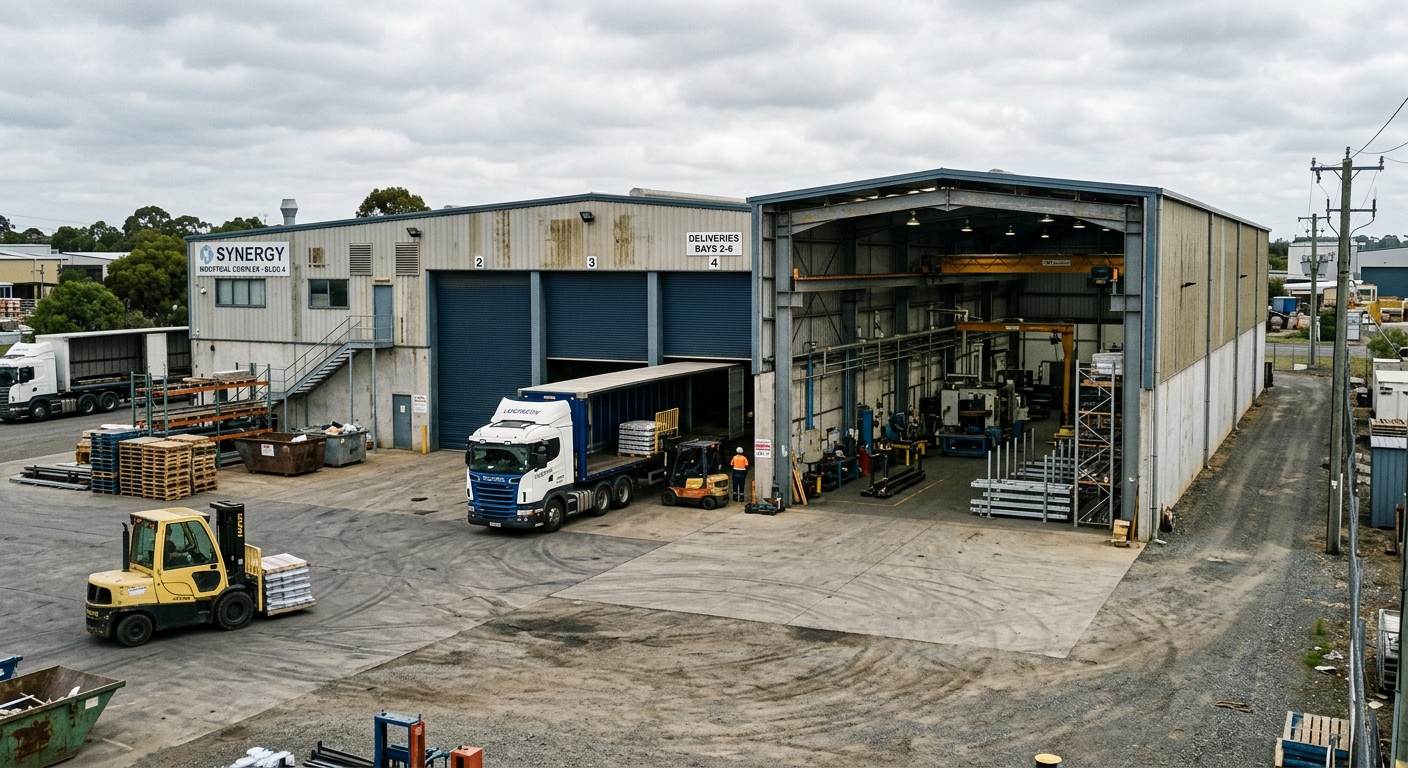
Picture two commercial sites on the same Sydney street. One is an industrial unit in Penrith. The other is a purpose-built facility with a stormwater main and a power easement running through it. The zoning and land size are similar, but the valuation problem is completely different.
For the industrial unit, a valuer looks at what comparable units have sold and leased for. For the second site there may be no comparable sale at all, and the easement changes what you can build and where.
If you’re a property owner, solicitor or developer dealing with a specialised asset, or an easement over a commercial site, understanding specialised commercial asset assessments can help explain why valuation methods shift depending on the property type. It also covers why two competent valuers can take different approaches, and what to check before you rely on a number.
Summary
Most commercial property valuation runs on market evidence: sales, rents and yields from similar properties. Specialised assets break that pattern, because there’s little or no comparable evidence, the value depends on a business operating from the site, or the value sits in a legal right rather than a building.
Key takeaways:
- Valuers generally use three approaches: direct comparison, income and cost. Standard offices, shops and warehouses lean on the first two.
- Purpose-built assets with no market, such as treatment plants or hospital buildings, are usually valued on replacement cost less depreciation. The land is valued separately.
- Pubs, service stations and childcare centres are valued on the earnings a typical operator could sustain. The property is separated from the business.
- Easements and access rights are usually assessed by comparing the property’s value before and after the right is imposed.
- Compensation for compulsory acquisition follows state legislation and can include more than market value.
- The purpose of the valuation matters. Market value, financial reporting value, insurance value and compensation can all differ for the same asset.
The practical step is to engage a valuer with experience in your specific asset class, and give them the title documents, leases and trading accounts they’ll need.
How Commercial Property Valuation Works for Standard Assets
It helps to know the baseline before looking at what changes. Valuers work with three main approaches, and the evidence available decides which one leads.
Direct comparison
The valuer looks at recent sales of similar properties and adjusts for differences in location, size, condition and lease terms. It works well when there’s plenty of evidence, such as small industrial units or suburban retail strips.
The income approach
Investors buy offices, shops and warehouses for the income they produce. The valuer takes the net income (rent less outgoings the landlord can’t recover) and divides it by a capitalisation rate, or yield, drawn from market sales.
As a simple illustration, $500,000 of net income on a market yield of 6.25% points to a value of about $8 million. On larger assets, a discounted cash flow projects income and costs over several years instead.
The cost approach
This adds the land value to the cost of the building improvements, less depreciation. On standard assets it’s usually a cross-check. On specialised assets, it can become the main method.
Normally a valuer tests one method against another. Specialised assets are where that gets harder, because one or more of the methods stops working.
What Counts as a Specialised Asset?
The term gets used loosely. In practice it covers three different situations, and mixing them up causes a lot of confusion.
- Purpose-built assets with no real market. Think of a hospital, school campus, water treatment plant or courthouse. They’re rarely sold, and when they are, the buyer usually plans to convert them.
- Trade-related (operational) property. Pubs, service stations, childcare centres, medical centres, motels and caravan parks do change hands. The price depends heavily on the business trading from them.
- Rights and interests. Easements, airspace, licences and leasehold interests are valued for the legal right, not the building.
| Asset type | Why it’s different | Method usually leading |
| Office, shop, warehouse | Regular sales and leasing evidence | Direct comparison, income capitalisation |
| Pub, service station, childcare or medical centre | Value tied to operator earnings and sometimes licences | Earnings-based income approach, cross-checked with sales |
| Hospital, school, treatment plant | Purpose-built, rarely traded | Cost approach (replacement cost less depreciation) |
| Land burdened by a pipeline, drainage or power easement | Rights restrict use of part of the site | Before-and-after comparison, supported by sales evidence |
| Airspace, licence or leasehold interest | Value sits in the terms of the right | Depends on the terms, usually income or market evidence tied to the right |
Depreciated Replacement Cost: Valuing Assets With No Market
When nothing comparable sells, valuers estimate what it would cost to replace the asset with a modern equivalent. They then subtract allowances for the age and limitations of what’s actually there.
Take a hypothetical not-for-profit with a purpose-built training centre in Parramatta and specialised fit-out. No one has sold anything similar. The valuer would work out the cost of a modern equivalent, deduct for obsolescence, and add the land value.
Land and buildings are treated separately
The land is generally valued on its existing use, using land sales. The building is assessed on cost. The two are then added together.
Three types of obsolescence
- Physical: wear and tear, structural ageing.
- Functional: the layout or design no longer suits modern needs, such as ceiling heights that don’t work for current operations.
- Economic: external factors reduce the asset’s usefulness, such as reduced demand in the area.
Valuers also test whether the operation could reasonably support the figure. A cost number for a facility that could never justify its replacement isn’t the same as a market value.
For financial reporting under Australian Accounting Standards, the cost approach is now framed as “current replacement cost” rather than the older depreciated replacement cost label. Not-for-profit and public sector entities can use it as a measure of fair value for specialised assets with no active market. If you’re commissioning a valuation for accounts or an auditor, confirm which basis is required.
Commercial Property Valuation for Pubs, Service Stations and Childcare Centres
These assets sell, but what a buyer pays is driven by the business’s earnings. So the valuer works out the fair maintainable earnings, meaning what a competent, typical operator could reasonably earn from the site. That’s not necessarily what the current owner earns.
Take two identical childcare centres in Castle Hill, hypothetically. One runs at full occupancy under an excellent operator. The other struggles with staffing and poor management.
The valuer normalises both to typical occupancy, market wages and a market rent. Then they apply a rate drawn from comparable sales. The two centres end up much closer in value than their trading results suggest.
Separating the property from the business
On operational assets, the valuer often has to split out:
- the real property (land and buildings)
- business goodwill
- plant, equipment and fit-out
- licences or entitlements, such as liquor or gaming
Liquor and gaming rules are set by each state, so what’s included in a sale can vary. The split can matter for finance, tax and contracts, and the impact of rental income decisions can also influence how investors assess the strength and sustainability of a commercial asset. Check the specifics with your accountant or solicitor.
Easements, Access Rights and Encumbrances: How They Affect Commercial Property Valuation
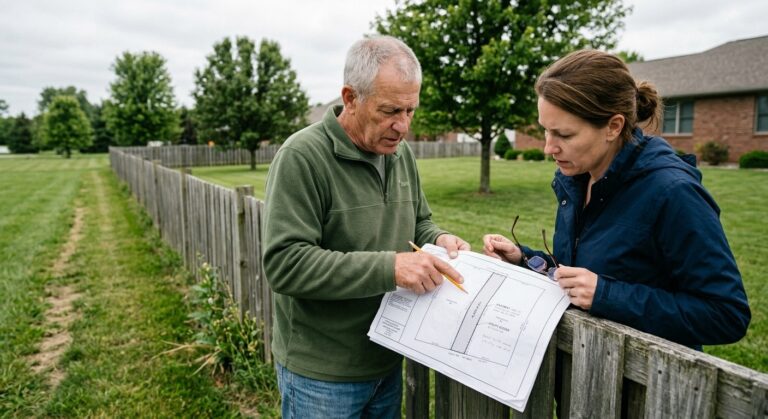
An easement is a registered right for someone else to use part of your land for a set purpose. That might be drainage, access, pipes, cables or power lines. The holder could be a neighbour, a council or a utility.
On a commercial site an easement can be far more than a line on a title. It can:
- take part of the site out of the buildable area
- restrict where you can build, park or excavate
- disrupt loading, circulation or future expansion
- worry lenders, buyers and tenants
The before-and-after method
The usual approach is to value the property as if the easement didn’t exist, then value it with the easement in place. The difference is the loss.
It isn’t the land value of the strip. It’s the effect on the whole property. Consider a hypothetical drainage easement, three metres wide, along the rear of an industrial lot in Penrith. It looks minor on paper, but if it sits where a loading dock extension was planned, the loss can be far bigger than the strip’s land value.
Some negotiations use a rule of thumb, such as a percentage of the land rate for the affected strip. That’s fine as a cross-check, but it shouldn’t replace a proper before-and-after assessment.
What the valuer looks at
- Location, width and length of the easement
- What it restricts, such as buildings, car parking, landscaping or excavation
- How disruptive maintenance access will be
- Effects on layout, development potential and rent
- Whether existing improvements already sit over it
- Whether you’re the burdened owner, or your land benefits from a right over a neighbour’s land, which adds value
When a Specialised Asset or Easement Is Acquired: Compensation Isn’t Just Market Value
Compulsory acquisition is governed by state and territory law, so the rules differ depending on where the land is.
In NSW, the Land Acquisition (Just Terms Compensation) Act 1991 applies. It requires regard to the land’s market value, any special value to the owner, loss from severance, loss from disturbance and the disadvantage of relocation, among the listed matters.
Market value here has its own definition. It’s the price a willing but not anxious buyer would pay a willing but not anxious seller at the acquisition date, ignoring any change in value caused by the public project itself.
The Act also has a specific provision dealing with the acquisition of easements and similar rights.
Other jurisdictions have their own regimes, such as Victoria’s Land Acquisition and Compensation Act 1986 and Queensland’s Acquisition of Land Act 1967. If an authority proposes to acquire your land or an easement over it, review the commercial property acquisition valuation process and obtain legal advice on which regime applies.
Why the Purpose of the Valuation Changes the Number
One asset can legitimately carry different figures depending on why it’s being valued:
- Market value for a sale, purchase or lending.
- Compensation for acquisition or an easement, which follows the relevant statute.
- Fair value for financial reporting under the accounting standards.
- Insurance replacement cost for cover, which isn’t a market value.
- Tax purposes, such as CGT or stamp duty, which follow the requirements of the relevant revenue authority.
Always tell your valuer the purpose at the start.
Common Misconceptions
- “Replacement cost equals market value.” Not necessarily. It can be higher or lower, and it doesn’t mean anyone would pay it.
- “Nobody would buy it, so it’s worth nothing.” A valuer considers alternative uses. A former specialised building may still have land or conversion value.
- “An easement only affects the strip it covers.” The effect often reaches well beyond the strip.
- “Any valuer can value it.” Specialised assets need someone who’s valued that asset class before, and understands the evidence available for it.
Choosing a Valuer for a Specialised Asset
Ask about their experience with your asset type, their qualifications and professional membership (such as the API’s Certified Practising Valuer designation), and their professional indemnity insurance. For contested or compensation matters, ask whether they’ve prepared reports for tribunals or courts.
Have these ready:
- Certificate of title and registered dealings, including easement plans
- Leases and licence agreements
- Recent trading accounts for operational property
- Surveys, building plans and planning approvals
- Any contamination or environmental reports
- Correspondence from any authority proposing an easement or acquisition
FAQs
Why can’t a valuer just use comparable sales for a specialised property?
Often there aren’t any. If the asset is purpose-built and rarely sold, the sales that exist may involve very different buildings. Valuers still use related evidence, such as land sales, but the main analysis shifts to cost or earnings.
What’s the difference between market value and replacement cost?
Market value is what the property would likely sell for in an open, arm’s-length sale. Replacement cost is what it would cost to rebuild a modern equivalent, less allowances for age and obsolescence. They can differ significantly.
How much does an easement reduce commercial property value?
There’s no standard percentage. An underground pipe along a boundary may have little effect, while an easement cutting through a development site can be substantial. It depends on where it sits and what it restricts.
Are pubs and childcare centres valued as property or as a business?
Both matter. The valuer values the real property, but the income analysis rests on what a competent operator could earn. Goodwill, plant and licences may be split out depending on the purpose.
Can I get my own valuation if an authority wants to acquire part of my land?
Yes. The compensation framework recognises the costs of obtaining legal and other expert advice. Confirm with your solicitor how that applies in your state.
What documents should I give a valuer?
Start with the title and any easement plans, then leases, trading accounts, building plans, planning approvals and any authority correspondence.
Conclusion
Specialised assets don’t fit the standard comparable-sales playbook. Depending on the asset, a valuer may lean on replacement cost, sustainable earnings or a before-and-after analysis for easements.
The right method depends on how the asset is used, whether a market exists and why you need the valuation. Getting that call right is what makes a commercial property valuation defensible.
Need an Independent View?
If you’re dealing with an easement, an access right or a specialised commercial asset, Easement Valuations can talk through your situation and the valuation approach that suits it. The site offers a free initial consultation. Call +61 438 080 786 for a no-pressure conversation.