

Property Valuation Expert Witness in Australian Family Law: How Joint Appointments Work
When a separating couple can’t agree on what the family home is worth, the valuation often becomes the sticking point for the whole property settlement. Understanding when a professional valuation is needed can help explain why an independent assessment becomes important. One of you thinks the house is worth more than the other does, and neither of you will budge until someone independent weighs in.
That’s where a property valuation expert witness comes in. In Australian family law, the usual approach is a single expert witness appointed jointly by both parties, and the value they arrive at is generally the evidence the court relies on. This article explains how that appointment works, what the joint instructions need to cover, and why easements and other encumbrances deserve more attention than they usually get.
Summary
Where parties can’t agree on what a property is worth, the family law system generally expects them to use one independent valuer, called a single expert witness. Ideally the parties agree on that valuer together. If they can’t, the court can order the appointment.
Both parties write to the valuer jointly, setting out the property, the valuation date and the instructions. Neither party should contact the valuer alone outside what the rules allow. Any rights affecting the property, such as a right of way or drainage easement, should be disclosed in those instructions, because a valuer can only value what they know about.
If one party disagrees with the report, there are options, including asking questions through the proper process and, in some cases, going to court. Those options come with time and cost, so the best protection is getting the appointment and instructions right at the start. A family lawyer should guide the legal process, and the valuer provides the independent value.
What a Property Valuation Expert Witness Does in a Family Law Case
An expert witness is someone with specialist knowledge who gives an opinion the court can consider. A property valuation expert witness gives an independent opinion on the market value of a property, usually a home, investment property or piece of land.
The key word is independent. The valuer has a duty to give honest evidence based on their professional judgement, not to whichever party engaged them. That’s what makes the report useful. If the valuer was simply working for one side, the other side would have no reason to trust it. The same concern arises in estate-related property disputes, where beneficiaries may have different views about what a property is worth.
Why the court prefers one valuer
Two competing valuations mean two sets of fees, more time, and a fight over whose valuer is more credible. A single expert avoids most of that. Both parties start from the same number, and the discussion moves to what the figure means for the settlement.
The Federal Circuit and Family Court of Australia (Family Law) Rules 2021 set out the framework for expert evidence in Part 7.1. Under those rules, evidence on a disputed issue like property value is generally expected to come from a single expert witness, though the court can allow other evidence in some circumstances.
How a Single Joint Expert Is Appointed
By agreement between the parties
The most straightforward route is agreement. Some couples agree on a valuer directly. Others use a process where one party nominates a few names and the other chooses. The valuer should be properly qualified, typically a Certified Practising Valuer with the Australian Property Institute (API).
If the parties cannot agree on a valuer, they may ask the API State or Territory Chair to nominate one for a family law valuation, subject to the API’s requirements. It’s worth asking your solicitor about the most practical approach for your situation.
By court order
If the parties can’t agree, the court can order the appointment of a single expert witness. This is more common where communication has broken down or one party is refusing to cooperate.
Going it alone
Each party can instead engage their own valuer. That isn’t forbidden, but the court generally needs to accept that evidence, which usually means applying for permission. The result is often more expensive and slower, because the court then has to weigh two competing reports.
Writing the Joint Letter of Instruction
Once the valuer is appointed, both parties sign a joint letter setting out what they want valued. This letter is the valuer’s brief, so vague or incomplete instructions lead to a report that doesn’t answer the question anyone needed answered.
A good letter usually covers:
- The property address and a clear description of the land and improvements
- The legal interest being valued, such as full ownership or a share
- The valuation date, which should be agreed on or set by the court
- The basis of value, usually market value, along with any assumptions
- Documents the valuer will receive, such as the title search, plans and any leases
- Whether an internal inspection is needed and how access will be arranged
Disclose easements and encumbrances
This is the part most often overlooked, and it’s where I’d spend the most time.
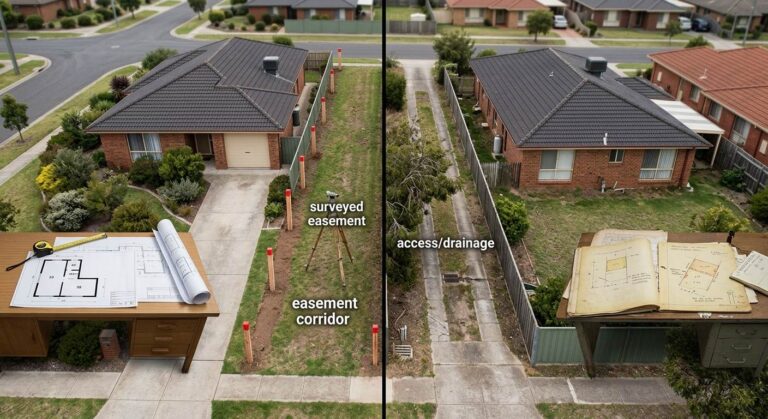
An easement is a right that benefits or burdens land, usually registered on the title. Common examples in Australia include:
- Rights of way giving a neighbour access across your driveway or yard
- Drainage easements allowing stormwater or sewer pipes to run through part of the land
- Easements for support restricting how close you can build or excavate
- Easements for services such as power lines or telecommunications cables
- Restrictions on use or positive covenants that limit what can be built or done on the land
Each of these can affect how much of the land is usable, how easily it can be sold or redeveloped, and what a buyer would reasonably pay. A valuer who isn’t told about them may produce a report that looks fine on paper but doesn’t reflect the property’s actual position.
In NSW, easements created when a plan of subdivision is registered are often set out in a s 88B instrument attached to that plan. Your solicitor can help you locate the title documents, and the joint letter should refer to them.
Unregistered rights
Some rights affecting a property aren’t on the title at all. They might be informal access arrangements or rights that have developed over time. Whether those rights are legally enforceable is a question for the lawyers. But if a party knows about one, the valuer should be told, because it may still affect how the property is used or perceived.
An illustrative scenario
Imagine a Sydney terrace on Torrens title with a registered right of way over its side driveway, benefiting the house next door. The joint letter describes the property as unencumbered, and the report is prepared on that basis. Once the report is issued, one party points out the right of way, and the report has to be revisited. A simple disclosure in the instructions at the start would have avoided the delay and the cost.
This is a hypothetical example to show the process, not a real case.
Common Misconceptions
“The single expert decides the property settlement.”
They don’t. The valuer determines value. The parties, their lawyers or the court decide how the property is divided.
“Once the report is issued, it can’t be questioned.”
Parties can raise concerns and ask for clarification through the proper process. The rules set out how that works, and it’s not a free-for-all.
“If nobody uses the easement, it doesn’t matter.”
The question is what rights exist, not how often they’re exercised. A valuer generally needs to consider the right itself, even if it’s rarely used in practice.
“A cheaper valuation is always the better choice.”
The right fit matters more than the lowest fee. A valuer with experience in your type of property and the relevant issues will usually produce a more useful report.
What Happens If One Party Disagrees With the Report
Disagreement with a single expert’s report is common, but there are defined ways to deal with it, and they come with time and cost.
Parties can usually put written questions to the expert, in a way that’s shared with the other side. They may also be able to request a conference with the valuer to clarify the report. These steps are set out in the rules and should be followed carefully, because informal contact with the valuer can cause problems.
If the disagreement remains, a party may seek the court’s permission to rely on their own valuer. In some cases, a party may want to question the expert in court. The party wanting that usually has to arrange and pay for the expert’s attendance. Timeframes and procedures depend on the current rules and the particular court process, so it’s worth getting advice from a family lawyer early.
Questions to Settle Before You Appoint a Valuer
Before you sign anything, it’s worth working through a short checklist:
- Is the valuer properly qualified and independent of both parties?
- Has the valuer dealt with properties with similar easements or encumbrances?
- Have you gathered the title search and any registered plan or s 88B instrument?
- Does the joint letter describe the interest being valued and the valuation date clearly?
- Have you asked for an estimate of timing and cost, and how those will be shared?
Frequently Asked Questions
Who pays for a single expert witness in a family law case?
Costs are usually shared between the parties, but how they’re split is generally agreed between you or set by the court. It’s worth raising this before the valuer is instructed.
Can I use my own valuer instead of a joint single expert?
You can engage your own valuer, but you’ll usually need the court’s permission before that evidence is accepted. It’s typically slower and more expensive than a joint appointment.
Is a family law valuation the same as a bank valuation?
No. A bank valuation is generally for lending purposes. An expert witness report needs to meet the court’s requirements, be independent and address the questions the court needs answered.
Do I need to tell the valuer about an easement that isn’t on the title?
Yes, tell the valuer and your solicitor. The valuer can only consider what they know, but whether an unregistered right is legally enforceable is a question for your lawyers.
How long does a single expert valuation take?
It depends on the property, access for inspection and the valuer’s workload. Ask for an estimated timeframe when you appoint them.
Conclusion
A joint property valuation expert witness gives both sides one independent value to work from, which saves time and money when the family home is the biggest asset. The appointment process matters, and so does the joint letter of instruction. Easements and other encumbrances can change a property’s value significantly, so make sure they’re on the table before the valuer starts work.
Need Help With an Easement-Affected Valuation?
If your property has an easement, right of way or another encumbrance and you need to understand how it affects value, Easement Valuations can help you work through the valuation questions. Call Easement Valuations on +61 438 080 786. Your family lawyer will guide the court process, and a clear valuation gives them solid evidence to work with.