

Stamp Duty Valuation NSW: Do You Need One When Adding a Spouse to Title?
Plenty of couples decide to add a spouse to the title of a home they already own, usually after getting married or moving in together. It feels like a paperwork exercise, so the stamp duty question often comes as a surprise. Some people end up with a bill they didn’t budget for, and others find out too late that the value used for duty was wrong.
This article explains when a stamp duty valuation in NSW may be needed, why registered easements deserve attention, and what to sort out before lodging anything. It also puts the valuation needs for ownership changes into context, so you can better understand which type of assessment may be relevant.
Summary
Adding a spouse to a property title is a transfer of an interest in the land, and in NSW that transfer can attract stamp duty on the value of the share being transferred. Whether a valuation is needed depends on the transaction, the price or consideration involved, and whether the value is clear. Registered easements, such as a right of way or a drainage easement, can reduce the market value of the land, which matters when that value is the basis for duty. Before you proceed, confirm how the transfer is structured, check the title for easements and other encumbrances, and speak with Revenue NSW or a solicitor about any exemptions that might apply to your situation.
What a Stamp Duty Valuation Actually Is
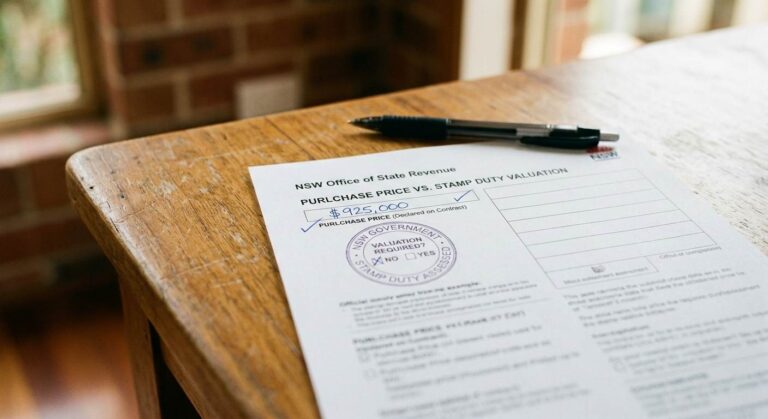
For transfer duty purposes, a valuation may assess the market value of a property or an interest in it at the relevant date, but where no exemption applies, the dutiable value is generally the greater of the consideration and the property’s unencumbered value. Revenue NSW uses a value like this when it needs to work out duty on a transfer, particularly where the consideration isn’t a straightforward sale price.
It’s easy to assume the council valuation or the figure on a recent bank valuation will do the job. Those figures serve different purposes. A council land value is used for rating, and a bank valuation is for lending. Neither is automatically the stamp duty value.
Does Adding a Spouse Trigger Stamp Duty in NSW?
This is where people get caught out. Adding someone to the title is not always a simple gift, and it isn’t always free of duty either.
In general terms, when you transfer part of your interest in a property to someone else, the transfer can be dutiable. Whether duty applies, and how much, depends on how the transfer is structured and the circumstances in which it happens. NSW does have exemptions for some transfers between spouses or de facto partners, including certain transfers made as part of a relationship breakdown under a court order or binding financial agreement. A voluntary transfer made to add a spouse may qualify for a stamp duty exemption if the eligibility conditions are met. However, the rules are different for property transfers between parents and children, where duty generally applies unless a specific exemption or concession is available.
Because the rules turn on the specific facts, this is a question to put to Revenue NSW or a conveyancer before you lodge anything. Ask about the structure of the transfer, the dutiable value, and any exemptions you may be eligible for.
When a valuation is more likely to be needed
- The transfer isn’t made for a clear price, or the consideration is hard to pin down
- The price paid or the declared value looks low compared with the market
- The transfer is part of a wider restructure, such as a change from sole ownership to joint tenancy or tenancy in common
- Revenue NSW asks for supporting evidence of the property’s value
How Easements Can Affect the Value
This is the part many owners overlook. An easement is a right that one piece of land has over another. Common examples in NSW include:
- A right of way giving a neighbour access across your driveway
- A drainage easement allowing stormwater or sewer pipes to run under your backyard
- An easement for services, such as electricity or telecommunications lines
Easements that appear on the title are described as registered easements. They’re generally recorded on the certificate of title and the deposited plan. Their effect on value depends on how much they restrict the use of the land. A small drainage easement under a rarely used corner may barely move the figure. A right of way that cuts through the middle of a block could move it considerably.
Registered versus unregistered easements
A registered easement appears on title and binds later owners. An unregistered easement, sometimes arising from long-standing use or an informal arrangement, may still affect the property but isn’t recorded in the same way. For a stamp duty valuation, the difference matters because the valuer has to work from what can be verified and what actually affects the land. An easement that isn’t on title can be harder to quantify, and it may not be treated the same way as a registered one.
If your title shows any easements, bring a copy of the title and the plan into the discussion early. Don’t assume a previous valuation accounted for them.
Common Misconceptions
“Adding my spouse is just paperwork.” It’s a transfer of an interest, and the paperwork has a duty consequence attached.
“The council valuation is the stamp duty value.” It isn’t. Council land values are set for a different purpose and often lag the market.
“Easements don’t matter if nobody uses them.” An easement is a legal right, whether or not it’s being used day to day. It still affects value and what you can do with the land.
“A bank valuation will cover everything.” A lending valuation may not address easements, the exact valuation date, or the specific requirements of a duty assessment.
Practical Steps Before You Add a Spouse to Title
- Pull a current title search and deposited plan so you know exactly which easements and encumbrances are registered.
- Confirm with Revenue NSW or a solicitor how the transfer will be treated and whether any exemption applies.
- Work out the value of the interest being transferred, not just the whole property.
- Check whether your transfer is part of a broader change, such as a restructure involving a trust or a change to how you hold the property.
- Keep records of any previous valuations, including the date and the assumptions used.
Frequently Asked Questions
Do I always pay stamp duty when I add my spouse to the title in NSW?
Not always, but you shouldn’t assume you’re exempt. Some transfers between spouses or de facto partners may qualify for an exemption depending on the circumstances, so check with Revenue NSW or a solicitor before lodging.
How does an easement change the stamp duty valuation?
A registered easement can reduce the market value of the land by restricting how it can be used. The valuer needs to consider the easement’s location, size and effect on the property when working out the value for duty.
Is a stamp duty valuation the same as a council valuation?
No. Council land values are set for rating purposes and aren’t designed to reflect the stamp duty value of a specific transfer.
Can an unregistered easement still affect my property?
It can. Some easements arise from long-standing use or informal arrangements and aren’t on title. They can still affect the property, but they’re harder to verify and quantify, so it’s worth getting advice early.
What should I do if I’m not sure whether a valuation is needed?
Start with the title search and a conversation with your conveyancer or Revenue NSW. Bring the details of the transfer and any easements, and ask directly whether a valuation will be required.
Conclusion
Adding a spouse to a NSW property title can trigger stamp duty, and whether it does depends on how the transfer is structured and which exemptions apply. Don’t assume it’s a simple formality. Check the title for registered easements early, because they can change the market value that a duty assessment relies on.
Get advice before you lodge, and keep records of any valuations you rely on. A few hours of checking now can save a costly surprise later.
Need Help With an Easement Affecting Your Property’s Value?
If there’s an easement on your title and you’re not sure how it affects the value of your property, Easement Valuations can help. Easement Valuations, +61 438 080 786. A valuation that accounts for the easement’s location, size and effect on the land can give you and your advisers something concrete to work from before you proceed.