

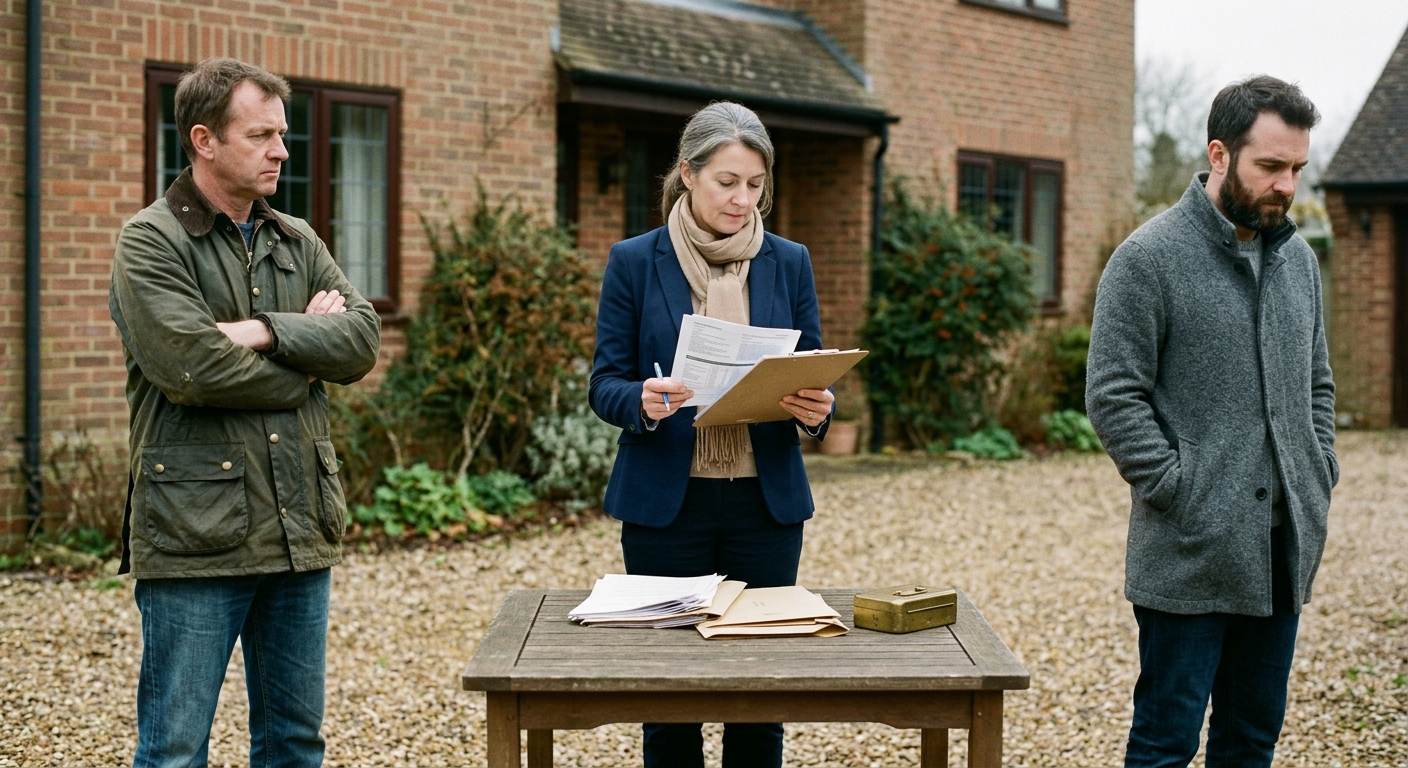
Deceased Estate Disputes: How a Property Valuation Expert Witness Protects Your Inheritance
When someone passes away and leaves a house or investment property behind, that single asset is often the biggest thing up for grabs in the estate. It’s also, more often than not, the thing everyone disagrees about.
Maybe one sibling reckons the family home in the Adelaide Hills is worth $1.2 million, while another thinks it’s closer to $950,000. Maybe the executor got a “mate’s rates” appraisal from a local agent that conveniently favours one beneficiary. Maybe the Australian Taxation Office needs a date-of-death value for capital gains tax purposes, and nobody can agree on a number. Understanding the purpose of an independent property valuation can help explain why a formal assessment is often required in these situations.
This is where a property valuation expert witness comes in. Unlike a real estate agent’s appraisal, an independent valuation from a qualified expert carries genuine legal weight — it can be relied on in the Supreme Court, used to satisfy the Family Provision Act process in your state, and stand up to scrutiny from other beneficiaries’ lawyers.
In this article, we’ll explain what a property valuation expert witness actually does, when you need one in a deceased estate matter, how courts treat this kind of evidence, and what to look for if you’re choosing someone to value a contested property.
Summary
Deceased estate disputes over property usually come down to one thing: money, and specifically, what the property is actually worth. Disagreements can arise between beneficiaries who feel a will wasn’t fair, between an executor and the beneficiaries over how a property should be sold or divided, or simply because nobody can agree on a figure for tax or settlement purposes.
An independent property valuation expert witness resolves this by providing an unbiased, evidence-based opinion of value — often calculated as at the date of death, rather than today’s market — that’s prepared specifically to withstand legal and financial scrutiny. Courts and the ATO generally give far more weight to a formal valuation report from a qualified, independent valuer than to an agent’s appraisal or a beneficiary’s own estimate.
Key things to consider: whether you need a current or retrospective (date-of-death) valuation, whether the court will accept a single expert or wants each side to appoint their own, who pays for the valuation, and whether your chosen valuer has genuine experience giving evidence in contested matters. Getting this right early can prevent a dispute from dragging on — and can materially affect how much of the estate each beneficiary actually receives.
What Is a Property Valuation Expert Witness?
A property valuation expert witness is a qualified, independent valuer engaged to assess the value of real estate for the purpose of legal proceedings or a formal dispute — as opposed to a valuation done for everyday purposes like refinancing or curiosity.
The key word is independent. In a deceased estate dispute, everyone involved has a stake in the outcome — beneficiaries want the number that suits them, and even executors can find themselves accused of bias if they’ve engaged a valuer with a personal connection to the family. An expert witness owes their duty to the court, not to whoever is paying the invoice. That’s not just a nice principle; in most Australian jurisdictions, valuers acting as expert witnesses are required to sign a formal code of conduct acknowledging this overriding duty before their report can be relied on.
This distinguishes an expert witness valuation from:
- A real estate agent’s appraisal – free, quick, but not independent (agents often want the listing) and generally not accepted as formal evidence.
- A bank valuation – done for lending purposes, usually conservative, and not intended for legal use.
- An online estimate – based on automated data, with no site inspection and no legal standing whatsoever.
Only a properly qualified valuer, usually a Certified Practising Valuer, preparing a formal written report to court or professional standards will typically be accepted as expert evidence.
Why Deceased Estate Disputes Often Come Down to Property Value
Most deceased estates in Australia contain relatively few high-value assets, and for many families, the family home or an investment property is by far the largest one. That creates a few predictable flashpoints.
When a will is contested
Family provision claims — where an eligible person argues they haven’t been adequately provided for in a will — exist in every Australian state and territory, though the specific legislation and eligibility rules differ (for example, NSW operates under the Succession Act 2006, while Victoria uses the Administration and Probate Act 1958). In almost every one of these claims, the court needs to know what the estate is actually worth before it can decide whether the provision made was adequate. If the estate’s main asset is a property, its valuation effectively sets the size of the pie everyone is arguing over.
When beneficiaries can’t agree on price
It’s extremely common for a will to leave a property “to be sold and proceeds divided equally,” or for one beneficiary to want to keep the family home and buy out their siblings’ share. Both scenarios require an agreed value. If the beneficiaries can’t agree, this is often where a dispute over the valuation itself becomes the actual fight — similar to situations where parties need guidance on when parties cannot agree on a property’s value and an independent expert is required to resolve the disagreement.
When there’s a dispute over executor conduct
Executors have a legal duty to act in the best interests of all beneficiaries, not just themselves or one favoured family member. If beneficiaries suspect a property was sold below market value, or that an executor’s own appraisal was unrealistically low (perhaps because the executor wanted to buy the property themselves), an independent valuation is often the first step in challenging that decision.
When tax and duty questions need answering
Even without a dispute, an inherited property usually needs a formal valuation for:
- Capital gains tax (CGT) purposes, where the property’s value as at the date of death can determine the beneficiary’s future cost base (this depends on when the deceased acquired the property and whether it was their main residence).
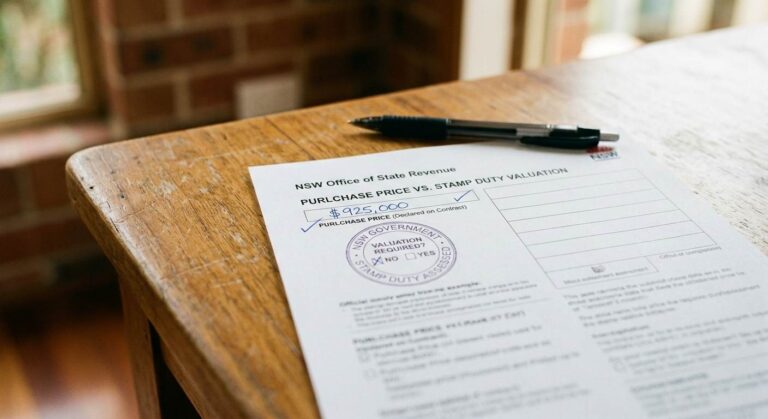
- Stamp duty considerations, since most states offer exemptions or concessions on transfers to beneficiaries under a deceased estate, but the rules and thresholds vary by state.
These aren’t disputes in the traditional sense, but they still require the kind of defensible, independent valuation an expert witness provides — because the ATO or state revenue office can query a figure that looks off.
How Courts Treat Property Valuation Evidence in Estate Disputes
If a deceased estate matter ends up before the Supreme Court (which handles probate and most family provision claims) or, in some family situations, the Family Court, the way valuation evidence is handled follows fairly consistent principles across Australia, even though the specific court rules differ by state.
Single expert vs competing experts
Courts increasingly prefer a single joint expert — one valuer appointed either by agreement between the parties or by court order, whose report both sides rely on. This tends to be faster and cheaper than a “battle of the experts,” where each side brings their own valuer and the court has to weigh up two competing opinions.
That said, competing experts still happen, particularly in higher-value or more contentious matters. When this occurs, courts may direct the experts to produce a joint report identifying where they agree and disagree, narrowing the issues before a hearing.
The expert’s overriding duty
Whether appointed jointly or by one party, a property valuation expert witness in Australian court proceedings is bound by an expert witness code of conduct specific to that court. In practice, this means the valuer must:
- Provide an independent, objective opinion, regardless of who is paying them.
- Disclose the facts, assumptions and methodology behind their valuation.
- Acknowledge if a question falls outside their expertise, rather than guessing.
- Comply with any expert conclave or joint report process the court orders.
A valuer who does not comply with applicable expert evidence requirements may risk their evidence being given less weight by the court. — which is why choosing someone with genuine litigation valuation experience matters more than it might seem.
What a Property Valuation Expert Witness Actually Does
A proper expert witness valuation is a more thorough process than a standard market appraisal. It typically involves:
- A physical inspection of the property – noting condition, improvements, defects, and anything affecting value that isn’t obvious from the street or from photos.
- Research into comparable sales – genuinely comparable properties, adjusted for differences in size, condition, location and timing, rather than a rough “similar houses nearby” guess.
- Consideration of the relevant valuation date – for estate matters, this is very often the date of death, not today, which requires the valuer to research market conditions as they stood at that earlier point.
- A detailed written report – setting out the valuer’s qualifications, the methodology used, the evidence relied on, and a reasoned conclusion on value, structured to meet the relevant court’s requirements for expert evidence.
- Availability to give evidence – if the matter proceeds to a hearing, the valuer may need to appear, explain their report, and be cross-examined on it.
Retrospective (date-of-death) valuations
This is one of the most misunderstood parts of the process. Beneficiaries often assume a valuer will simply assess “what the house is worth now.” But for estate purposes, the relevant value is frequently what the property was worth on the date the deceased passed away — which could be months or even years before the valuation is actually carried out.
A retrospective valuation requires the valuer to research historical sales data, market conditions and listing activity from that earlier period, rather than simply inspecting the property and applying today’s prices. This is a specialised skill, and it’s worth confirming your chosen valuer has genuine experience preparing retrospective reports before you engage them.
A Realistic Example (Hypothetical)
To illustrate how this plays out, consider a hypothetical scenario: three adult children inherit their late mother’s home in a suburb of Brisbane in equal shares. One sibling has been living in the property and wants to keep it, offering to pay out the other two based on a friend’s real estate agent’s appraisal of $780,000. The other two siblings believe it’s worth closer to $900,000, based on a nearby sale they saw online.
Neither figure is reliable — the agent’s appraisal wasn’t independent, and the online comparison didn’t account for the property’s condition or exact location. In a case like this, an independent property valuation expert witness would inspect the home, research genuinely comparable sales, and produce a defensible figure both sides (and their lawyers, if it goes that far) can rely on. It won’t necessarily land exactly between the two guesses, but it removes the guesswork and the perception of bias from the equation.
Choosing the Right Property Valuation Expert Witness
Not every registered valuer is well suited to expert witness work. When you’re selecting someone for a deceased estate dispute, it’s worth checking:
- Qualifications and certification – look for a Certified Practising Valuer (CPV), typically through the Australian Property Institute (API), which signals a recognised professional standard.
- Independence – the valuer should have no prior relationship with any beneficiary, the executor, or the property itself.
- Experience with litigation and retrospective valuations – not all valuers regularly prepare reports for court, or value properties as at a historical date.
- Familiarity with your state’s court requirements – expert witness rules differ slightly between the Supreme Court of NSW, the Supreme Court of Victoria, and other state and territory courts.
- Clear, plain-English reporting – a report that a judge, lawyer or accountant (none of whom are valuers) can actually follow and rely on.
If a dispute is genuinely contentious, or the estate’s property is high in value, it’s often worth engaging a property valuation expert witness early — well before positions have hardened — rather than waiting until the matter is already before a court.
Who Pays for the Valuation?
This depends on the circumstances. In many cases, the cost of a valuation commissioned by the executor is paid from the estate itself, as it’s considered a legitimate expense of properly administering the estate. If one beneficiary independently commissions their own valuation for a dispute, they’ll usually cover that cost themselves, at least initially, though costs can sometimes be recovered as part of a court order if the matter proceeds to a hearing. It’s worth clarifying this before commissioning a report, ideally with advice from the estate’s lawyer or accountant.
FAQs
Do I need a property valuation expert witness for every deceased estate?
No. If beneficiaries agree on the value of a property, or the estate doesn’t include real estate, a formal expert witness valuation usually isn’t necessary. It becomes important when there’s disagreement, a family provision claim, or a need for a defensible figure for tax purposes.
What’s the difference between a valuation and a real estate appraisal?
An appraisal from a real estate agent is a free, informal estimate, often given with a view to winning a sale listing. A formal valuation from a qualified, independent valuer involves a documented methodology, comparable sales analysis and a report suitable for legal or financial reliance.
Can I use a bank valuation instead of an expert witness valuation?
Generally not for a dispute. Bank valuations are prepared for lending purposes, tend to be conservative, and typically aren’t intended or structured to be relied on as formal evidence in a legal dispute.
How is a property valued as at the date of death if that was years ago?
The valuer researches historical sales and market data from around that date to form a retrospective opinion of value, rather than valuing the property based on today’s market.
Who chooses the valuer in a deceased estate dispute?
This varies. Beneficiaries and the executor can agree on a single valuer, the court can appoint or approve one, or, in more contested matters, each party may engage their own — sometimes followed by a joint expert report narrowing the disagreement.
Does a valuation affect capital gains tax on an inherited property?
It can. Depending on when the deceased acquired the property and whether it was their main residence, the date-of-death value may become relevant to the beneficiary’s future CGT position. This is a complex area, and it’s worth getting advice from an accountant alongside the valuation.
Conclusion
Property is usually the biggest asset in a deceased estate, and disagreements over its value are one of the most common causes of estate disputes in Australia. An independent property valuation expert witness provides a defensible, evidence-based figure that courts, the ATO and beneficiaries can rely on — often preventing a disagreement from escalating into a drawn-out legal battle.
Need an Independent Valuation for a Deceased Estate?
If you’re an executor, beneficiary, or legal or accounting professional dealing with a contested property in a deceased estate, Easement Valuations can provide an independent property valuation, including retrospective date-of-death assessments, suitable for court or family provision matters. You can reach the team on +61 438 080 786 to discuss what’s involved for your particular situation.