

Why Stamp Duty Valuations Are Important for NSW Property Transfers
Every property transfer in New South Wales carries a duty obligation, and for a straightforward sale between unrelated parties, the contract price usually settles the question of what duty is payable. The moment a transfer falls outside that simple scenario, whether it involves family members, related entities, a trust, or a self-managed super fund, the contract price is no longer enough on its own, and Revenue NSW needs an independent figure to assess duty against.
A stamp duty valuation NSW report exists to provide exactly that figure. This guide explains why these valuations matter so much for NSW property transfers, what happens when a transfer proceeds without one, and what a report actually needs to demonstrate to satisfy Revenue NSW.
SUMMARY
What This Article Covers: This guide explains why stamp duty valuations matter for NSW property transfers and how Revenue NSW uses them to calculate duty. It covers the transactions most likely to require one, the risks of proceeding without proper valuation evidence, and what a compliant report needs to contain. It also answers the questions property owners, accountants, and solicitors ask most often about the process.
The Role of a Stamp Duty Valuation in a Property Transfer
Revenue NSW assesses transfer duty on the higher of the declared price or the property’s genuine market value. For an arm’s length sale on the open market, these two figures are generally the same, since a willing buyer and a willing seller have already tested the price against the market. Where a transaction is not conducted at arm’s length, however, there is no independent price for Revenue NSW to rely on, and a stamp duty valuation becomes the only credible evidence of what the property is actually worth.
This is why the requirement comes up so often in transfers between family members, related entities, trusts, and self managed super funds. None of these transactions involve a genuine negotiation between unrelated parties, so an independent valuer needs to step in and establish the figure duty will be calculated against.
Why the Contract Price Alone Is Not Sufficient
A nominal or below-market contract price does not reduce the duty payable on a related-party transfer, because Revenue NSW looks through the stated price to the property’s genuine market value. Without an independent valuation, there is a real risk the declared figure will not be accepted.
Transactions Where Stamp Duty Valuations Matter Most
Certain categories of NSW property transfer are especially likely to require independent valuation evidence.
Family and Related Party Transfers
For agreements involving related parties, Revenue NSW requires appropriate evidence of value to support the dutiable value used in the transaction.
Transfers Into a Trust, Company or SMSF
Moving property into a family trust, a company structure, or a self-managed super fund is a dutiable transaction in NSW, and because these transfers are rarely negotiated on the open market, a stamp duty valuation is generally required regardless of whether the property is residential, commercial, or industrial.
Business and Commercial Restructures
Where commercial, industrial, or retail property moves between related entities as part of a business restructure, an independent valuation confirms the transfer reflects genuine market value rather than an internally agreed figure.
Property Transferred During Family Law Settlements
Property transferred as part of a family law settlement can attract specific duty concessions in NSW, but an independent valuation is still generally required to confirm the property’s value before any concession is applied.
What Happens Without a Proper Stamp Duty Valuation
Some property owners assume a declared price or an informal estimate will be sufficient, and this assumption can create genuine complications.
Reassessment Risk
If Revenue NSW considers a declared value understated, it can request further evidence or conduct its own assessment, which can lead to a reassessment of the duty payable well after the transfer has already settled.
Delays at Settlement
Missing or inadequate valuation evidence can hold up a transaction while Revenue NSW seeks further information, creating delays that affect every party involved in the transfer.
Downstream Complications for Accountants and Trustees
Without an independent report, accountants and trustees are left without the documentation needed to support the figure used, which can complicate future capital gains tax calculations, SMSF audits, and other reporting obligations tied back to the transfer date.
What a Compliant Stamp Duty Valuation Report Must Contain
A report accepted without further correspondence from Revenue NSW needs to address several specific elements.
Independence and Professional Qualifications
The valuer must be independent of the transaction and hold recognised professional qualifications, particularly for related party and family transfers where any perceived conflict could undermine the figure’s credibility.
A Clearly Stated Effective Date and Methodology
The report should state an effective date aligned with the transaction and reference genuinely comparable sales, with adjustments clearly explained rather than a single unsupported figure.
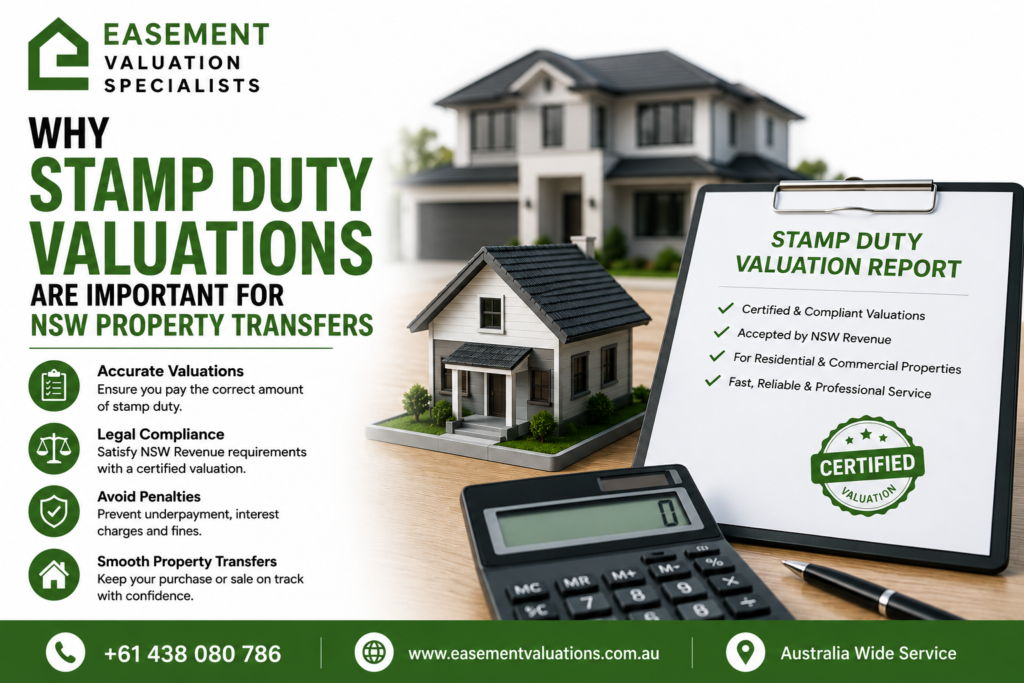
Why Stamp Duty Valuations Matter for NSW Property Transfers
● When a property is transferred between family members below market value
● When a property moves into a trust, company or self-managed super fund
● When related entities transfer property during a business restructure
● When a property forms part of a family law settlement
● When a transaction has no arm’s-length sale price for Revenue NSW to reference
● When Revenue NSW specifically requests independent evidence of value
Frequently Asked Questions
Q: Why does Revenue NSW require a stamp duty valuation?
A: Revenue NSW assesses duty on the higher of the declared price or genuine market value, and where a transaction is not conducted at arm’s length, an independent valuation becomes the only reliable evidence of that value.
Q: Do all NSW property transfers need a stamp duty valuation?
A: No. A standard open market sale between unrelated parties generally relies on the contract price. Family, related party, trust, and SMSF transfers are the transactions most likely to require an independent valuation.
Q: Can a family transfer at a low price reduce the duty payable?
A: No. Revenue NSW assesses duty on the property’s genuine market value regardless of the price stated on the transfer document, which is why an independent valuation is needed.
Q: Who should prepare a stamp duty valuation?
A: An independent, appropriately qualified property valuer with no financial interest in the transaction should prepare the report, particularly for related party transfers.
Q: What happens if Revenue NSW disagrees with a declared value?
A: Revenue NSW can request further evidence or conduct its own assessment, which may delay settlement or lead to a reassessment once the transfer has already been finalised.
Q: Does a stamp duty valuation apply to SMSF property transfers?
A: Yes. Transferring property into or out of a self-managed super fund is treated as a dutiable transaction, and because it is rarely conducted at arm’s length, an independent valuation is generally required.
Q: When should a stamp duty valuation be obtained?
A: It is best obtained early in the transaction process, ideally before contracts are finalised, so the figure is available and defensible by the time the transfer proceeds to settlement.
CONCLUSION
Stamp duty valuations matter because Revenue NSW simply cannot rely on a declared price for transactions that fall outside a genuine open market sale. An independent, well-prepared valuation protects property owners, accountants, and solicitors from a reassessment and gives everyone involved confidence the transfer will hold up to scrutiny.
Engaging an independent valuer early in the process, before contracts are finalised, remains the most effective way to avoid delays and complications later on.
Need a Stamp Duty Valuation in NSW? Contact Easement Valuations
Easement Valuations prepares independent, compliant stamp duty valuation reports for property owners, accountants, and solicitors across NSW. Our valuers are independent of every transaction and experienced across family transfers, SMSF contributions, and business restructures.
Visit easementvaluations.com.au | NSW and Australia-wide | Request a Quote