


How Easement Valuations Help Property Owners Understand Land Value Impact
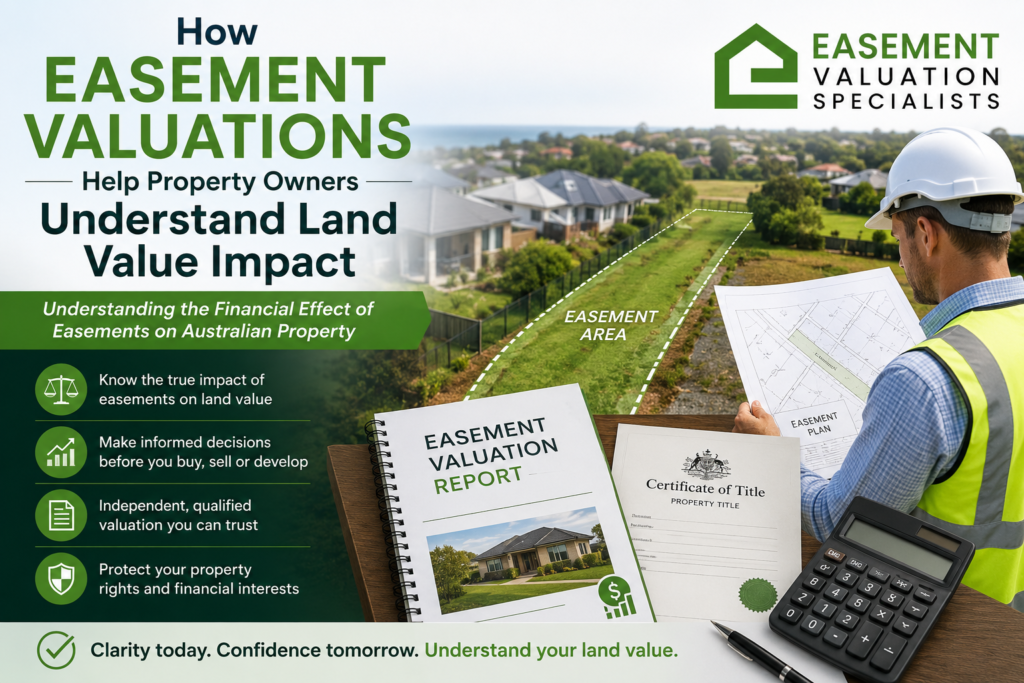
Most property owners do not think about easements until someone tells them their land has one, or until they try to develop, sell, or borrow against a property and the question of what it is actually worth suddenly gets complicated. Easements are legal rights granted over a piece of land that allow another person, government body, or utility to use part of that land for a defined purpose. They are registered on the title, and they follow the land, not the owner.
What many property owners in Australia do not realise is that easements can reduce land value significantly, in some cases by tens of thousands of dollars, and in others by a much larger margin depending on the size of the affected area, the nature of the restriction, and the current use of the land. Understanding that impact requires more than reading the title certificate. It requires a formal, independent easement valuation prepared by a qualified professional who can assess what the burden or benefit of the easement actually means for market value.
Summary
This article explains what an easement valuation is and why it matters to property owners across Australia. It covers the main types of easements that commonly affect land value, how a qualified valuer assesses the financial impact, the situations where a formal easement valuation is either legally required or practically essential, and what property owners need to understand before buying, selling, or developing land that carries an easement burden. Two real-world scenarios illustrate the difference between understanding and not understanding the value impact before it becomes a costly problem.
What an Easement Valuation Actually Measures
An easement valuation is an independent assessment of how the presence of an easement affects the market value of the land on which it sits. It is not simply a description of the easement itself. It is a professional analysis of what a willing buyer, fully informed about the easement and its implications, would be prepared to pay compared to what an identical property without that encumbrance would fetch in the same market.
Easement Valuation — What It Means
An easement valuation establishes the difference in market value between land that is burdened by an easement and the same land without that burden. The result is used to determine compensation, inform sale negotiations, and satisfy legal and compliance requirements across Australia.
This distinction between the land with and without the easement is what separates a proper easement valuation from a simple property appraisal. A general market valuation of a property might note that an easement exists. An easement valuation specifically quantifies what it costs the landowner in terms of reduced value, restricted use, or diminished development potential.
Who Benefits From an Easement Valuation
Landowners who need to understand compensation entitlements when a utility or government body seeks to acquire an easement benefit directly. So do buyers and sellers of affected land who need an accurate value before negotiating. Solicitors, town planners, SMSF trustees, accountants dealing with capital gains tax obligations, and courts or tribunals hearing disputed compensation claims all rely on independent easement valuations prepared to a professional standard.
Burdened Land Versus Benefited Land
An easement attached to benefited land commonly involves a dominant tenement and servient tenement. The servient tenement carries the burden of the easement, while the dominant tenement receives the benefit; however, an easement in gross may benefit a statutory authority without a dominant parcel.” The benefited land, known as the dominant tenement, gains something, typically access or utility that it would not otherwise have.
A right of way easement that allows a neighbouring property to cross your land to reach a public road reduces your land value while potentially adding value to the neighbour’s property. Understanding both sides of this equation is important when a valuation is being prepared for either party.
How Easements Affect Land Value Across Australia
Not all easements hit land value the same way. The impact depends on the type of easement, how much land it covers, what restrictions it imposes, and what the surrounding market actually rewards. A slim drainage easement tucked along the back fence of a suburban lot might barely register in the final valuation. A transmission line easement running through the centre of a rural property is a different story entirely. It can lock up a large chunk of usable land and put off most buyers before they have even seen the rest of the block.
What actually moves the number is the local market, the specific wording of the easement on title, and how buyers in that particular area weigh the trade-off. A drainage easement running under a mature garden in inner Sydney might go almost unnoticed by buyers. Put that same easement on a compact site in a Brisbane townhouse corridor, where every extra square metre affects yield, and it can shave a meaningful amount off what a developer is willing to pay.
Why Construction Restrictions Drive the Biggest Losses
The most significant value reductions from easements occur when the encumbrance prevents, limits, or delays development. An easement that prohibits any structure being built within its corridor effectively removes that area from the developable footprint of the land. In markets where zoning and floor space ratios make every extra bedroom or extra lot financially significant, the easement becomes a direct constraint on the land’s highest and best use.
Valuers assess this impact by modelling what the land could achieve without the easement and comparing it to what is achievable with it in place. The difference in development potential translates directly into a difference in value.
When an Easement Can Add Value
Not every easement reduces value. An easement appurtenant, which grants access rights to a benefited property, can be essential to the use of that land. A rural property with no legal road access that gains an access easement over a neighbouring parcel may increase substantially in value because it becomes a viable, marketable holding rather than a landlocked block. Valuers must consider both the burden side and the benefit side of any easement to produce a complete picture.
Real Scenario: Transmission Line Easement, Western Sydney; A landowner in outer western Sydney had owned a residential block for over a decade. When he came to sell, the agent’s appraisal did not separately address the wide transmission line easement that crossed the back third of the land. A buyer made an offer based on the appraisal, with finance approved at the same figure. When the buyer’s solicitor examined the title, the easement was noted. An independent easement valuation was commissioned, which assessed that the affected area could not be built upon and that the presence of high-voltage infrastructure above the site would deter a significant proportion of residential buyers. The value impact was assessed at approximately 22 percent of the total lot value. The sale was renegotiated at a substantially lower price, the original finance approval was withdrawn and reprocessed, and settlement was delayed by several weeks. A valuation that properly addressed the easement from the outset would have established a correct market figure before the offer was accepted.
When You Need an Easement Valuation
Easement valuations are required or strongly advisable in a range of specific circumstances. Some are legally mandated. Others are commercially prudent. Many property owners discover the need only after a problem has already emerged.
| Situation | Why an Easement Valuation Is Needed |
| Granting a new easement | The landowner needs to know the compensation they are entitled to receive for the burden placed on their land |
| Disputing compensation for a compulsory easement | A government or utility acquiring an easement must pay market-based compensation determined by an independent valuer |
| Buying or selling affected land | Both parties need to understand how the easement has adjusted the value before price negotiations |
| Litigation or tribunal proceedings | Courts and NCAT require a formal, independent valuation as evidence in disputes over easement rights or compensation |
| Stamp duty or capital gains tax | The ATO and Revenue NSW need an accurate land value where an easement materially affects the value of the lot being transferred |
| SMSF compliance | A fund holding land burdened by an easement must report the correct market value, which requires the easement’s impact to be independently assessed |
Compulsory Acquisition and Just Compensation
When a government authority or utility acquires an easement over private land compulsorily, the landowner is entitled to compensation on just terms. In New South Wales this is governed by the Land Acquisition (Just Terms Compensation) Act 1991 and equivalent legislation in other states.
Just compensation must reflect the market value of the rights acquired, any consequential damage to the remainder of the land, disturbance costs, and the ongoing impact of the easement on the use and enjoyment of the burdened lot. None of these components can be properly quantified without an independent easement valuation prepared by a Certified Practising Valuer.
Stormwater, Drainage and Pipeline Easements
Stormwater drainage easements are among the most common easements registered on residential and commercial lots across New South Wales, Queensland, and Victoria. They are created when a council or utility requires a defined corridor over private land to carry drainage infrastructure. Owners of lots burdened by these easements often underestimate the value impact until they seek development consent and discover that the easement corridor cannot be built over.
Pipeline easements for gas, water, or sewerage create similar issues. The restriction on building, planting deep-rooted vegetation, and making any material change to the surface above the pipeline adds a maintenance obligation to the landowner and removes flexibility from the lot. In a tight development market, this translates directly into measurable value loss.
What a Qualified Easement Valuer Looks At
An easement valuation is not a desktop estimate or a quick inspection. A Certified Practising Valuer undertaking an easement assessment will examine the title and registered easement documents to understand the exact terms of the encumbrance, the permitted uses within the easement corridor, the obligations placed on the landowner, and any restrictions on building, planting, or excavating.
The valuer will then inspect the site to assess the physical extent of the affected area, its relationship to the rest of the land, and how it interacts with the highest and best use of the lot. Comparable sales of similar land, with and without comparable easement burdens, are used to support the value adjustment.
The final report sets out the before and after values, the methodology applied, the evidence relied upon, and a clear statement of the value impact attributable to the easement. For litigation and tribunal use, the report must meet the requirements for expert evidence set out under the relevant court practice notes.
Working With Solicitors and Town Planners
In many easement valuation engagements, the valuer works alongside a solicitor or town planner to ensure the legal, planning, and financial dimensions of the easement are all properly addressed. The valuer’s role is to quantify market value impact. The solicitor interprets the legal rights and obligations. The town planner identifies whether the easement restricts current or future development consent.
This collaborative approach produces a more complete picture than any single professional working alone, and it is the standard approach in contested compensation cases and complex development scenarios.
Conclusion
Easements are not merely a technical note on a title certificate. They have real, measurable consequences for land value, development potential, and the rights a property owner can exercise on their own land. An independent easement valuation translates those consequences into a clear, evidence-based figure that can be used in negotiations, legal proceedings, tax assessments, and compliance reporting.
Whether you are facing a compulsory acquisition, purchasing land with a registered easement, dealing with a stormwater or pipeline corridor, or simply trying to understand what your land is actually worth with the encumbrance in place, the starting point is always the same: an independent assessment by a qualified professional who understands both the valuation methodology and the legal framework that governs easement rights in Australia.
Frequently Asked Questions
How does an easement affect the value of my land?
An easement typically reduces land value by restricting how the affected area can be used. The extent of the reduction depends on the type of easement, the size of the corridor, and how it interacts with the land’s development potential and highest and best use.
Do I need a formal easement valuation, or can I estimate the impact myself?
For any formal purpose such as compensation, litigation, tax assessment, or SMSF compliance, a formal independent valuation from a Certified Practising Valuer is required. Self-assessed estimates are not accepted by the ATO, revenue offices, or courts.
Can an easement increase my land value?
Yes, for the benefitted property. An access easement over neighbouring land, for example, can make a previously landlocked or difficult-to-access property fully usable and marketable. The benefited land gains value while the burdened land loses it.
How is compensation calculated when a utility acquires an easement over my land?
Compensation is based on the market value of the rights acquired, any damage to the remainder of the land, and disturbance costs. An independent easement valuation by a Certified Practising Valuer is the standard method for establishing this figure.
How long does an easement valuation report take?
Most standard easement valuation reports are completed within five to ten business days of instruction. Complex engagements involving significant development potential or litigation support may take longer.
Does a drainage easement always reduce my land value?
In most cases, yes, because the corridor cannot be built over, which reduces the usable footprint and development capacity of the land. The extent of the reduction depends on the size of the easement and how critical that area is to the land’s highest and best use.
Can I challenge compensation offered by a government authority for an easement?
Yes. Landowners have the right to obtain their own independent valuation and to dispute a government offer that does not reflect market-based just compensation. Independent valuation evidence is essential for any successful challenge.
Need an Independent Easement Valuation? Easement Valuations Australia prepares certified, independent easement valuation reports for compensation, litigation, tax, SMSF, and development purposes across every state and territory. AVI and API accredited, Australia-wide coverage.
Call us on +61 438 080 786 or visit Easementvaluations.com.au to Request a Quote today